
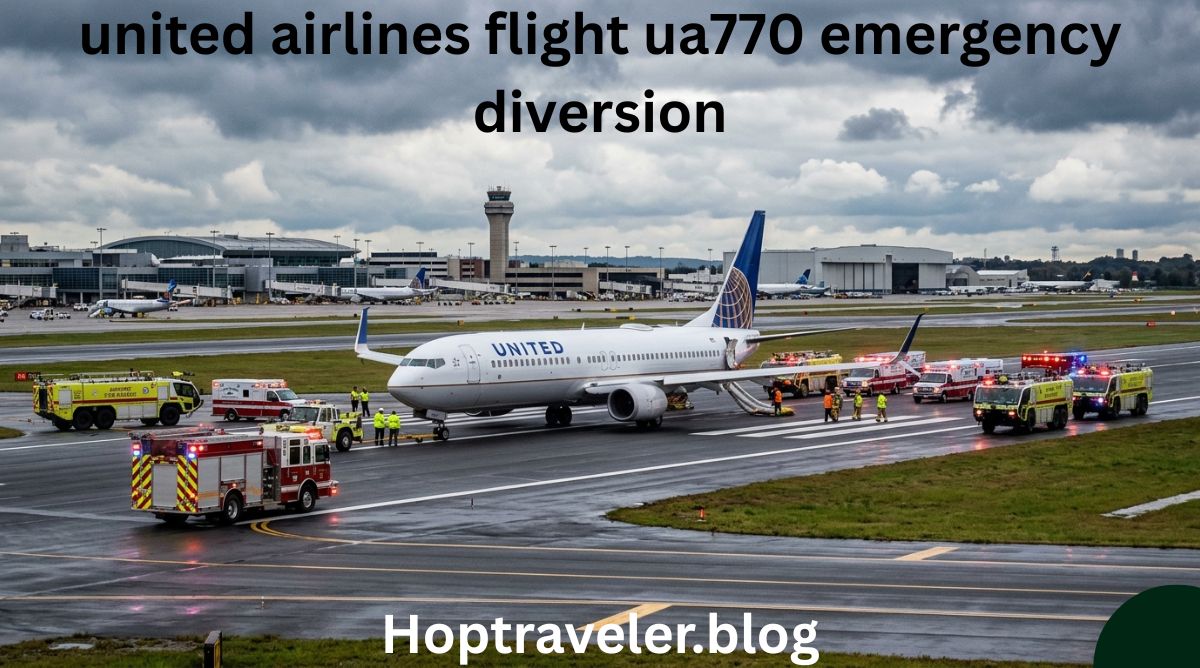
United Airlines Flight UA770 emergency diversion is an example of how modern aviation systems are designed to respond quickly and effectively to unexpected situations during flight. While air travel is one of the safest modes of transportation, there are rare instances where a flight must change its course and land at an alternate airport. This process, known as an emergency diversion, is carried out with strict procedures and a strong focus on safety. Understanding what happens during such an event helps explain how airlines manage risks and protect passengers and crew.
overview of united airlines flight ua770
United Airlines Flight UA770 is typically a scheduled commercial flight that may operate on domestic or international routes depending on airline planning. Like all United Airlines flights, UA770 is operated under strict safety regulations and uses advanced aircraft equipped with modern navigation and monitoring systems.
Flights of this nature are supported by highly trained pilots, cabin crew, and ground operations teams. These professionals are prepared to handle a wide range of situations, including emergencies that may require a diversion. When UA770 experiences an emergency diversion, it means that continuing to the original destination was no longer the safest option, and a new landing location was chosen.
what is an emergency diversion
An emergency diversion occurs when a flight must land at the nearest suitable airport due to a situation that requires immediate attention. This decision is made by the flight crew after evaluating all available information, including aircraft systems, passenger health, weather conditions, and operational constraints.
Unlike standard diversions, emergency diversions are more urgent and may involve situations that require rapid response. The primary goal is to ensure the safety of everyone on board while minimizing risks associated with the situation.
common causes of emergency diversion
There are several reasons why a flight like United Airlines Flight UA770 may need to perform an emergency diversion. Each scenario is handled with specific procedures and protocols.
medical emergencies
Medical emergencies are one of the most frequent causes of emergency diversions. If a passenger or crew member becomes seriously ill or injured, the aircraft may need to land quickly to provide access to medical care. Cabin crew are trained in first aid, but certain conditions require immediate professional treatment on the ground.
technical or mechanical issues
Aircraft are equipped with sophisticated systems that constantly monitor performance. If a system detects a malfunction or abnormal condition, pilots may decide to divert as a precaution. These issues can range from minor system warnings to more serious mechanical concerns that require inspection before continuing the flight.
cabin pressure or environmental concerns
Problems related to cabin pressure or air quality are treated with high urgency. Maintaining proper cabin pressure is essential for passenger safety, especially at high altitudes. If an issue arises, the aircraft may descend rapidly and divert to the nearest airport.
fire or smoke warnings
Any indication of smoke or fire inside the aircraft is considered a serious emergency. Even if the source is not immediately confirmed, pilots will follow emergency procedures and land as soon as possible. Aircraft are equipped with fire detection and suppression systems, but quick action is essential.
security threats
In rare cases, security concerns such as suspicious activity or potential threats can lead to an emergency diversion. Airlines and aviation authorities prioritize the safety of passengers and crew, and any potential risk is addressed immediately.
decision-making during an emergency diversion
The decision to divert a flight is made by the captain, who has ultimate authority over the aircraft. However, this decision is supported by a network of professionals and systems.
Pilots analyze real-time data from aircraft instruments, communicate with air traffic control, and consult with the airline’s operations center. This collaborative approach ensures that the best possible decision is made based on current conditions.
Air traffic control provides guidance on the nearest suitable airport, taking into account factors such as runway length, weather conditions, and available emergency services. The chosen airport must be capable of handling the aircraft and providing necessary support.
steps involved in the diversion process
Once the decision for an emergency diversion is made, a series of coordinated steps take place to ensure a safe landing.
informing passengers
The flight crew communicates with passengers, explaining the situation and providing instructions. Clear communication helps maintain calm and ensures passengers are prepared for landing.
adjusting the flight path
The aircraft changes its route to head toward the selected airport. Pilots follow air traffic control instructions while maintaining safe altitude and speed.
preparing the cabin
Cabin crew secure the cabin, ensuring that passengers are seated with seatbelts fastened. They also review emergency procedures and prepare for a potential emergency landing if required.
emergency landing
The aircraft lands at the diversion airport using standard or emergency procedures depending on the situation. Emergency services such as fire and medical teams are often on standby.
post-landing procedures
After landing, the aircraft is inspected, and passengers receive assistance. This may include medical care, rebooking, or accommodations depending on the circumstances.
passenger experience during an emergency diversion
For passengers, an emergency diversion can be a stressful experience. However, airline crews are trained to handle such situations professionally and provide reassurance.
Passengers may notice changes such as sudden announcements, route adjustments, or rapid descent. These actions are part of standard safety procedures. After landing, passengers are guided by crew members and airport staff to ensure their safety and comfort.
Airlines typically provide support services, including alternative travel arrangements, meals, and accommodations if necessary. Communication and customer service play a key role in managing passenger experience during such events.
safety systems and training
The successful handling of an emergency diversion like United Airlines Flight UA770 is made possible by advanced safety systems and rigorous training.
Aircraft are designed with multiple layers of redundancy, ensuring that critical systems continue to function even if one component fails. Pilots undergo extensive training in simulators, practicing emergency scenarios to prepare for real-life situations.
Cabin crew are trained in safety procedures, first aid, and emergency response, allowing them to assist passengers effectively during crises. Ground teams and air traffic controllers also play a crucial role in ensuring safe outcomes.
impact on airline operations
Emergency diversions can disrupt airline schedules and operations. Flights may be delayed, canceled, or rerouted, affecting both passengers and airline resources.
Airlines must coordinate with multiple departments to manage the situation, including maintenance teams, customer service, and logistics. Despite these challenges, the primary focus remains on safety and passenger well-being.
lessons from ua770 emergency diversion
The emergency diversion of United Airlines Flight UA770 highlights the importance of preparedness, teamwork, and decision-making in aviation. It demonstrates how multiple systems and professionals work together to handle unexpected situations effectively.
The event also reinforces the idea that safety is always the top priority. Even if a diversion causes inconvenience, it ensures that potential risks are addressed promptly and responsibly.
how passengers can prepare
Passengers can take steps to be better prepared for unexpected situations during flights. Keeping essential items such as medications, identification, and chargers in carry-on luggage is important. Staying calm and following crew instructions helps ensure a safe and smooth process.
Being flexible with travel plans and understanding that diversions are part of safety procedures can reduce stress. Awareness and preparedness contribute to a more positive travel experience even during disruptions.
conclusion
United Airlines Flight UA770 emergency diversion is a clear example of how the aviation industry prioritizes safety above all else. Emergency diversions are carefully managed events that involve coordination between pilots, air traffic control, and airline operations teams.
Through advanced technology, professional training, and established procedures, airlines are able to respond effectively to unexpected situations. While diversions may cause temporary inconvenience, they ultimately serve to protect passengers, crew, and aircraft. Understanding how these processes work provides confidence in the safety and reliability of modern air travel.
Tags: united airlines flight ua770 emergency diversion