
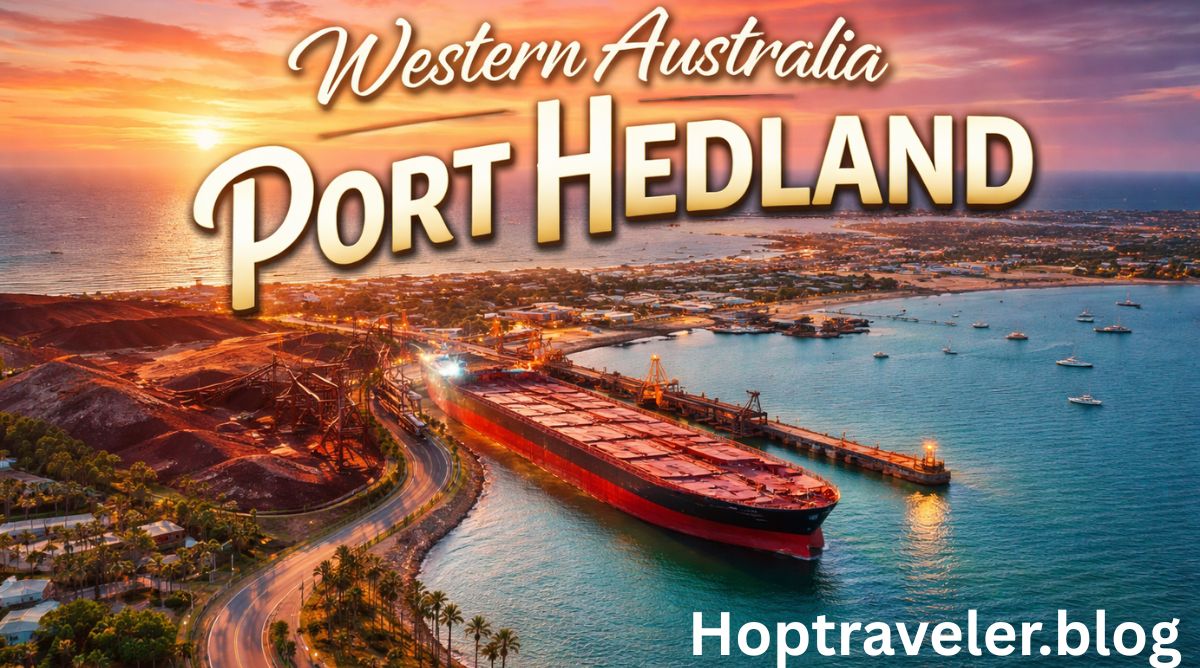
Located in the vast and resource-rich region of Western Australia, Port Hedland stands as one of the most significant industrial and maritime hubs in the country. Known primarily for its massive iron ore exports and strategic coastal position, Port Hedland is a town that blends economic importance with a unique outback coastal lifestyle. Over the years, it has transformed from a modest settlement into a globally recognized port town that plays a crucial role in international trade.
Port Hedland lies along the northwestern coastline of Australia, facing the Indian Ocean. Its remote location contributes to its distinctive identity, shaped by harsh climatic conditions, strong economic activity, and a resilient community. Despite its industrial reputation, the town offers a range of cultural, natural, and social experiences that make it more than just a port destination.
Geographic Location and Landscape
Port Hedland is situated in the Pilbara region, an area famous for its red earth, mineral wealth, and rugged terrain. The landscape surrounding the town is characterized by flat coastal plains, sparse vegetation, and striking contrasts between the deep blue ocean and the rich red soil.
The coastline itself features natural harbors and tidal flats, which have been instrumental in the development of the port. The town experiences some of the highest tidal ranges in Australia, which significantly influence both maritime operations and the natural environment.
The region’s remoteness adds to its appeal for those seeking a different kind of travel or living experience. Unlike major urban centers, Port Hedland offers wide open spaces, minimal congestion, and a strong connection to nature.
Climate and Weather Conditions
The climate in Port Hedland is classified as hot desert or semi-arid. Summers are extremely hot, with temperatures often exceeding 40 degrees Celsius, while winters are milder and more comfortable. Rainfall is relatively low throughout the year, although occasional heavy rains can occur due to tropical weather systems.
Cyclones are a notable feature of the region’s climate. During the cyclone season, which typically runs from November to April, the area can experience severe weather conditions, including strong winds and heavy rainfall. These events are closely monitored, and the town is well-prepared to handle such situations due to its experience with extreme weather.
The intense heat and sunlight define daily life in Port Hedland, influencing everything from work schedules to architectural designs.
Economic Significance
Port Hedland is best known for its role in the global mining industry. It is home to one of the busiest bulk export ports in the world, primarily handling iron ore shipments. The port serves as a critical link between Australia’s mining operations and international markets, particularly in Asia.
The economic activity in Port Hedland revolves heavily around mining and resource export. Major mining companies operate in the region, contributing significantly to both the local and national economy. The town’s infrastructure, including railways and port facilities, is designed to support large-scale industrial operations.
The constant movement of massive ships in and out of the harbor is a defining feature of Port Hedland. These vessels transport millions of tons of iron ore each year, making the town a key player in global trade.
History and Development
The history of Port Hedland dates back to the late 19th century when it was established as a small port to support pastoral activities. Over time, the discovery of rich mineral deposits in the Pilbara region transformed its role and importance.
The expansion of mining operations in the mid-20th century marked a turning point for the town. Infrastructure development accelerated, including the construction of rail lines and port facilities to handle increasing export volumes.
As the mining industry grew, so did the population and urban development of Port Hedland. The town evolved into a vital industrial center, attracting workers and businesses from across Australia and beyond.
Community and Lifestyle
Despite its industrial nature, Port Hedland has a vibrant and diverse community. Residents come from various backgrounds, including mining professionals, service workers, and families who have settled in the region.
The lifestyle in Port Hedland is shaped by its environment and economic activities. Work schedules often align with the demands of the mining industry, while leisure activities are influenced by the climate and available facilities.
Community events, local markets, and recreational facilities provide opportunities for social interaction and relaxation. The town has schools, healthcare services, and essential amenities that support daily life.
Living in Port Hedland requires adaptability, particularly due to the climate and remote location. However, many residents appreciate the sense of community and the unique experiences the town offers.
Cultural and Indigenous Heritage
The region around Port Hedland has deep cultural significance, particularly for Indigenous Australian communities. The land has been inhabited for thousands of years, and traditional knowledge and cultural practices continue to play an important role in the area.
Indigenous heritage is reflected in local art, stories, and cultural events. Visitors and residents alike have opportunities to learn about the history and traditions of the region’s original inhabitants.
Respect for cultural heritage is an important aspect of life in Port Hedland, and efforts are made to preserve and celebrate this legacy.
Infrastructure and Transport
Port Hedland’s infrastructure is designed to support its role as a major industrial hub. The port itself is equipped with advanced facilities for handling bulk cargo, particularly iron ore. Rail networks connect mining sites in the Pilbara region to the port, ensuring efficient transportation of resources.
The town also has road connections that link it to other parts of Western Australia. While it is remote, air travel provides an important connection to major cities, making it accessible for business and travel purposes.
Local transport within the town is relatively straightforward, with most residents relying on private vehicles.
Tourism and Attractions
Although Port Hedland is primarily known for its industrial activities, it also offers several attractions for visitors. One of the most popular experiences is watching the massive ships navigate the harbor, a spectacle that highlights the scale of the town’s operations.
The coastline provides opportunities for fishing, boating, and enjoying ocean views. Nearby natural areas offer a glimpse into the unique landscapes of the Pilbara region.
Visitors interested in learning about the town’s history and industry can explore local museums and information centers. These provide insights into the development of Port Hedland and its role in the global economy.
Challenges and Living Conditions
Living in Port Hedland comes with certain challenges. The extreme heat can be difficult to manage, particularly during the summer months. The remote location also means that access to some goods and services may be limited compared to larger cities.
The cost of living can be relatively high, influenced by the town’s industrial focus and logistical factors. Housing availability and prices can fluctuate based on demand from the mining sector.
Despite these challenges, many residents find the benefits of living in Port Hedland outweigh the difficulties. The strong job market, community spirit, and unique environment contribute to a rewarding experience for those who choose to live there.
Environmental Considerations
The industrial activities in Port Hedland have environmental implications, particularly in terms of emissions and land use. Efforts are made to manage these impacts through regulations and sustainable practices.
The natural environment of the Pilbara region is fragile, and conservation efforts aim to protect its unique ecosystems. Balancing economic development with environmental responsibility is an ongoing priority for the region.
Future Outlook
The future of Port Hedland is closely tied to the global demand for natural resources, particularly iron ore. As long as this demand remains strong, the town is likely to continue playing a key role in international trade.
Advancements in technology and infrastructure may further enhance the efficiency of port operations. At the same time, there is growing attention on sustainability and environmental management, which will shape future development.
Population growth and urban expansion are also expected as the town continues to attract workers and businesses. Investments in community facilities and services will be important to support this growth.
Conclusion
Port Hedland in Western Australia is a town of contrasts, where industrial शक्ति meets natural beauty and cultural heritage. Its significance as a global export hub is matched by its unique environment and resilient community.
From its strategic location and economic importance to its challenging climate and rich history, Port Hedland offers a distinctive experience that sets it apart from other towns. Whether viewed as an industrial powerhouse or a remote coastal settlement, it remains a vital part of Australia’s landscape and economy.
For those seeking to understand the dynamics of regional development, resource management, and community life in a remote setting, Port Hedland provides a compelling example of how these elements come together in a single place.
Tags: Western Australia Port Hedland